Guides · Safety
Are electric trikes safe for seniors? Six things that decide it
By Linda Garrett · · 7 min read01What does a trike make safer?
The moments when people fall off bicycles without anyone else being involved: starting, stopping, going very slowly, getting on and getting off. A trike stands by itself through all of them. You don't put a foot down at a stop sign. You don't hop to get going. You can stop dead on a path to let a dog pass and stay seated.
This matters more with age. The CDC says more than one out of four older people falls each year, and names lower body weakness and difficulties with walking and balance among the risk factors. A trike doesn't fix those. It does let people who have them keep cycling, which is why so many come to three wheels after 65.
The electric part helps in the same direction. A motor means you don't have to stand on the pedals to start on a slope, and you don't arrive home exhausted. The CDC recommends that adults 65 and older get at least 150 minutes of moderate aerobic activity a week, with balance and muscle-strengthening work. A trike you enjoy riding can be a way to get some of that.
02Do electric trikes tip over?
They can, and it's better to know how. A bicycle leans into a turn. A trike stays flat, so in a corner your weight pushes toward the outside. Go fast enough and the inside rear wheel lifts. It happens in three situations: a turn taken at speed, a sharp swerve, and riding across a steep side slope such as a driveway apron.
The fix is simple and a little unnatural if you've ridden bicycles all your life: brake before the turn, not in it, and don't lean. Sit upright or lean very slightly to the inside. On a cambered road, slow down. After a few rides it becomes a habit.
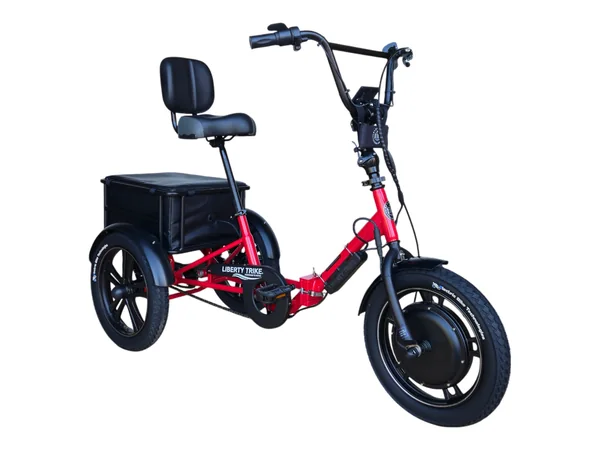
The trike helps or doesn't. A rear differential lets the two back wheels turn at different speeds in a corner, so the inside one doesn't scrub and push you wide. A low top speed keeps you out of trouble in the first place: the Lectric XP Trike2 stops at 14 mph and can be limited to 5 mph in its two lowest modes, the Liberty Trike at 12 mph.
03Which parts make one trike safer than another?
Five, and you can check all of them on a product page. They're also what our ranking for seniors weights most.
Step-over height. How high you lift your foot. From 13 inches on the Mokwheel Granite to 18 on some fat tire trikes. Under 15 is comfortable for most people.
Brakes. Hydraulic disc brakes need less hand strength than cable-pulled ones, which counts if you have arthritis. The Granite has one on each wheel.
Parking brake. It locks the trike while you get on, get off or load the basket. A trike on a slight slope will roll away without one.
Differential. See above. Not every brand fits one, and not every brand says.
Speed you can cap. Either a low top speed by design or a setting in the display. EVELO lets the rider lower the Compass's 20 mph limit; Lectric offers a 5 mph beginner cap.
A backrest, a wide saddle and a throttle are comfort items that turn into safety items on a long ride: a tired rider makes mistakes.
04Is the battery a fire risk?
It's the question to ask of any e-bike, and there's a clear way to answer it. Two standards matter. UL 2271 covers the battery pack. UL 2849 covers the whole electrical system: UL Solutions describes it as examining the electrical drive train, battery and charger system combinations. A trike certified to UL 2849 has been looked at as a system, which is the stronger claim.
Among the trikes we compare, Lectric, Mokwheel, Addmotor (Grandtan and Citytri), Emojo, Pedego and sixthreezero state UL 2849 for the trike. Viribus, Liberty Trike and the Addmotor Greattan L state UL 2271 for the battery, and MaxFoot speaks of a UL-certified battery. EVELO's Compass page doesn't mention either standard; ask.
Then there's how you charge. The Consumer Product Safety Commission is direct about it: always be present when charging, never charge while sleeping or when you aren't at home, and only use the charger provided with or recommended by the manufacturer. Unplug when it's done. Those habits cost nothing.
Video: "How to Ride an eTrike / Electric Tricycle", EVELO Electric Bicycles on YouTube. Not made by us; chosen because it shows the trike or the topic clearly.
05How should you learn to ride one?
Give it a week, and start somewhere empty: a church or school parking lot on a quiet morning.
Day one, motor off or on the lowest level. Get on and off five times using the parking brake. Ride in a straight line. Brake to a stop with both levers. Notice that you never put a foot down.
Day two, turns. Wide circles in both directions at walking pace, then tighter ones. Brake before each turn. If you feel the trike push toward the outside, you're going too fast for that radius.
Day three, the throttle and the assist. Pull away from a stop with the throttle, gently, then pedal. Try each assist level on a straight. Find the speed cap if your trike has one and leave it on.
Then the real world, in small bites. A quiet street, a curb cut, a gentle slope, your own driveway. Cross side slopes slowly. Only after that, the bike path on a Sunday.
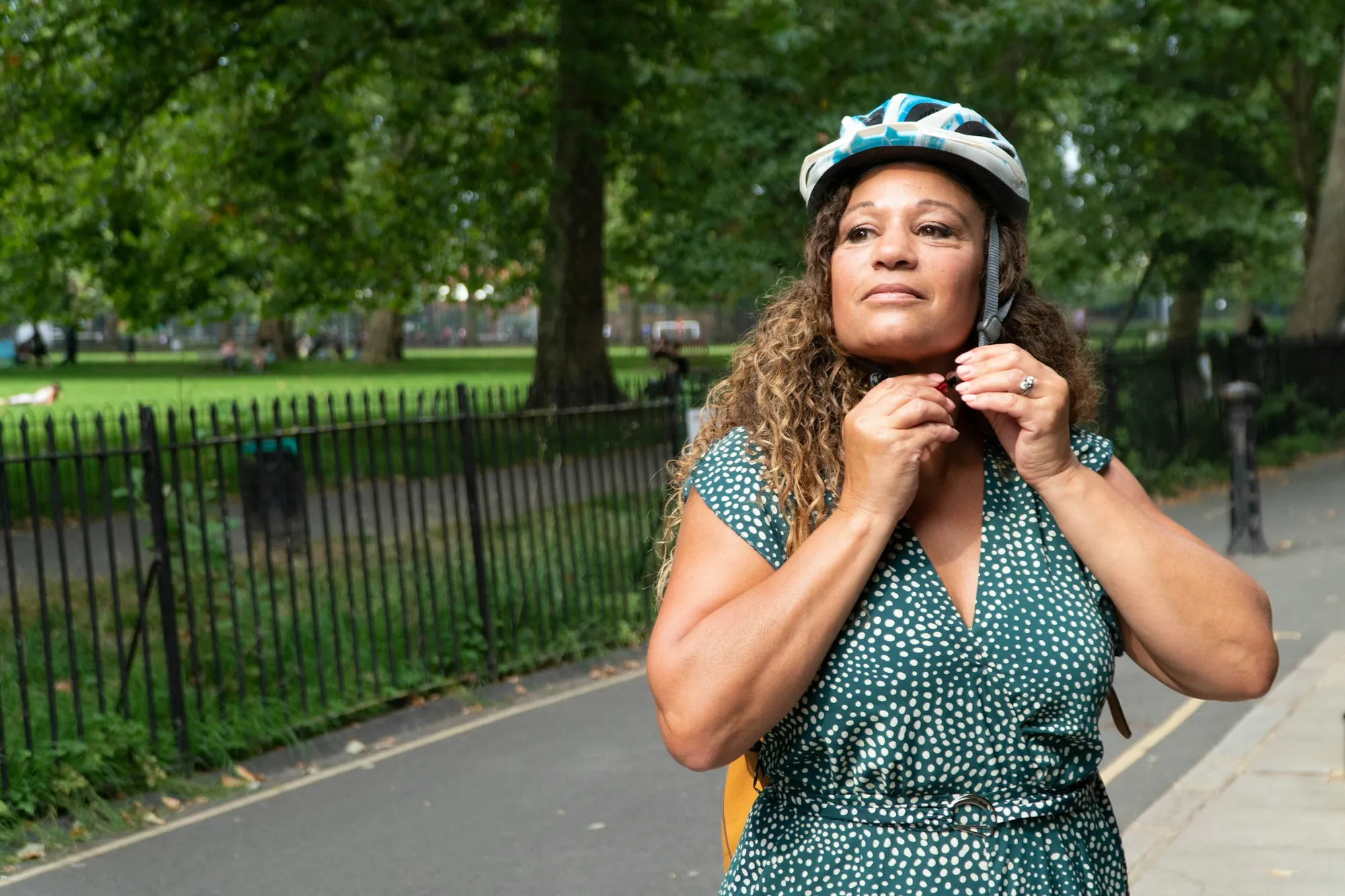
The CPSC adds two rules for every ride: always wear a bicycle helmet, and check the brakes, lights, tires and frame before you set off. It also reminds riders to expect that drivers and pedestrians haven't seen them.
06When is a trike not the answer?
When the difficulty isn't balance on a bicycle but something a trike doesn't solve. If you've had recent falls, dizzy spells, a stroke, a vision problem or you take medicines that make you drowsy, talk to your doctor before buying anything with a motor. Riding in traffic takes attention, hearing and reaction time, three wheels or two.
If walking itself is limited and you need help indoors as well as out, look at what a mobility trike like the Liberty Trike offers (it reverses, turns in 7 to 9 feet and splits in two for the car), and ask your doctor about a power scooter. The Medicare page on wheelchairs and scooters says Part B covers those only when they're medically necessary, after a face-to-face examination and a written prescription. It doesn't mention tricycles.
And if the trike is for a parent, bring them into the choice. The safest trike is the one its rider isn't afraid of.
07Which trikes would we point a senior to?
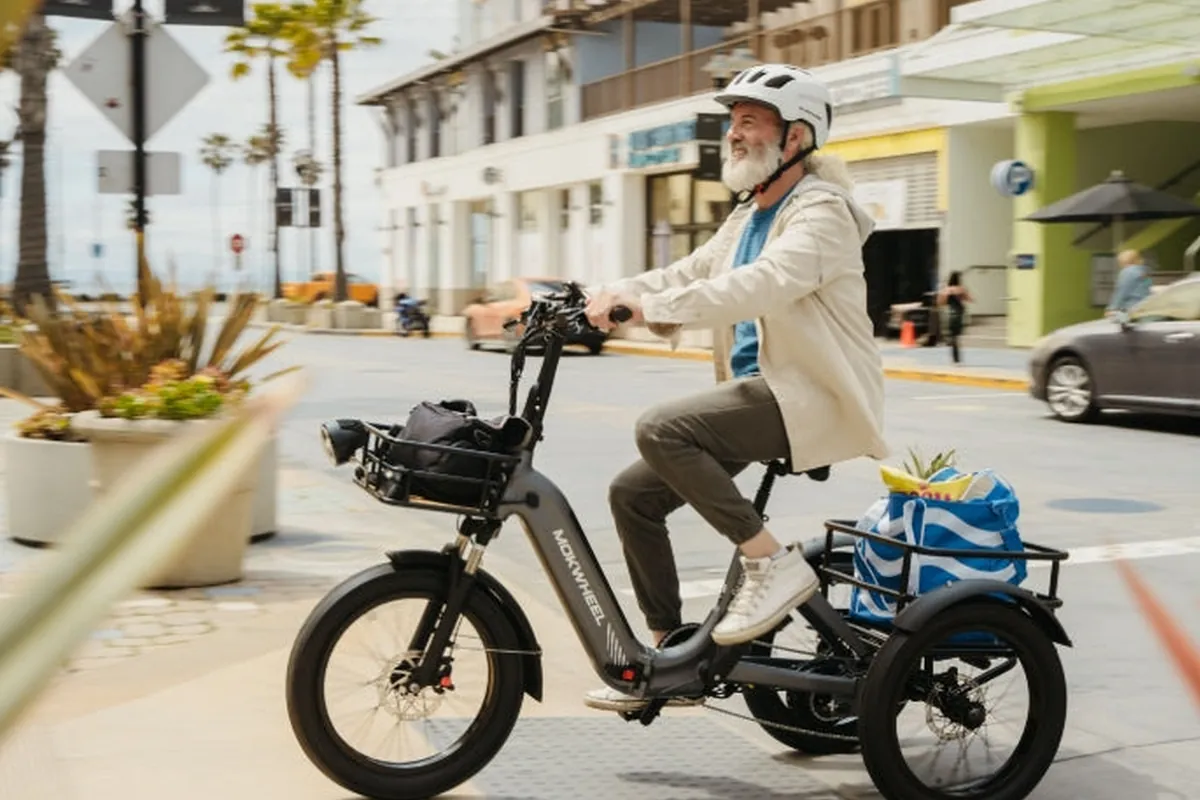
Three, for three situations. The Mokwheel Granite (9.5/10) if you want the lowest step-over and a brake on every wheel: 13 inches, three hydraulic discs, parking brake, backrest, 2-year warranty, $1,999.99.
The Lectric XP Trike2 (9.3/10) if you want the calmest ride for the least money: 14 mph at most, a 5 mph learning mode, hydraulic brakes, delivered assembled, $1,499.
The Liberty Trike (7.9/10) if the trike has to go indoors and into a car trunk in pieces. Its battery is small and its score in our formula is modest, but nothing else here does what it does.
Prices are those of November 13, 2026, on each brand's own store.
08The trikes in this guide, side by side
| Trike | ||||
|---|---|---|---|---|
| Motor | 500 W (860 W peak) | 750 W (1,310 W peak) | 500 W (1,092 W peak) | 750 W |
| Battery | 48 V 15 Ah (720 Wh) | 48 V 17.5 Ah (840 Wh) | 48 V 13 Ah (624 Wh) | 48 V 20 Ah (960 Wh) |
| Top speed | 20 mph | 17 mph | 14 mph | 20 mph |
| Payload | 350 lb | 415 lb | 415 lb | 360 lb |
| Stand-over height | 13 in | 13.5 in | 13.5 in | 13.8 in |
| Brakes | Hydraulic disc | Hydraulic disc | Hydraulic disc | Disc |
| Folds | Yes | Yes | Yes | Yes |
| Warranty | 2-year | 1-year | 1-year | 2-year |
| Where to buy | Check price at Mokwheel | Check price at Lectric | Check price at Lectric | Check price at Addmotor |
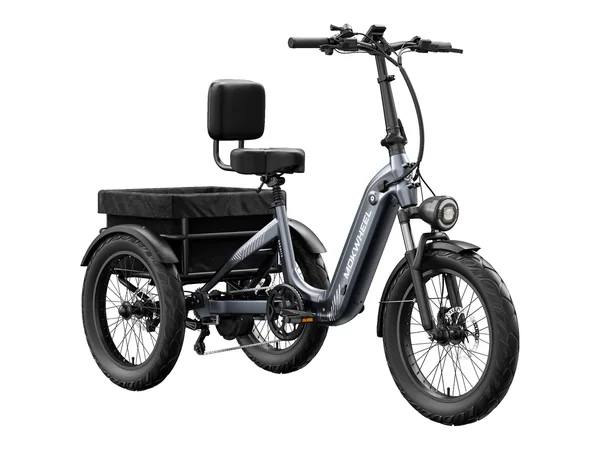
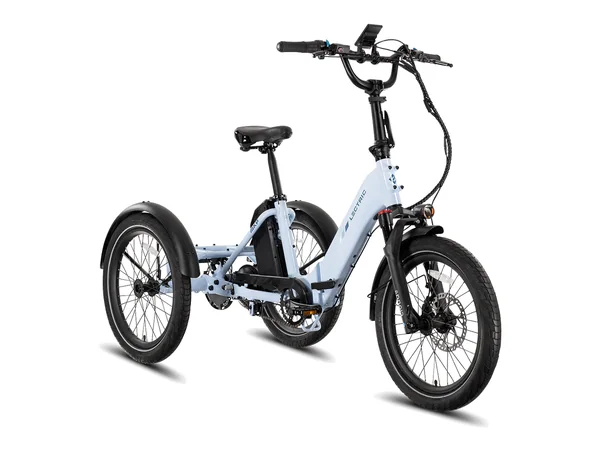
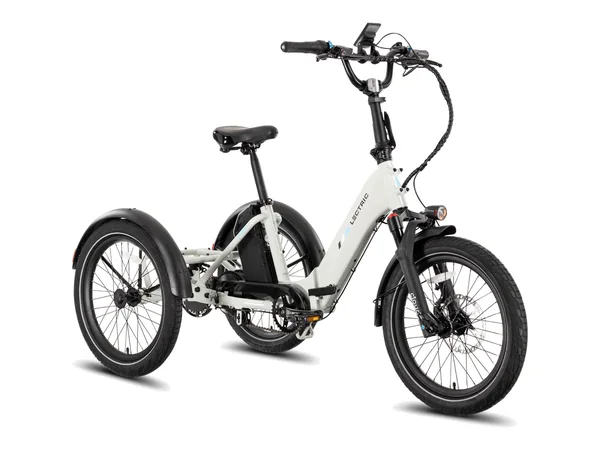
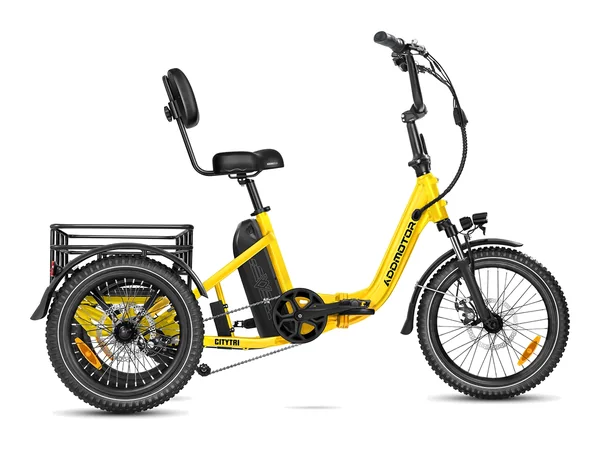
✓ marks the best figure of the row. Prices checked November 13, 2026 on each brand's own US store.
This guide helps you buy; it isn't medical or legal advice. Rules for electric bicycles change from state to state and city to city, and only your doctor knows whether riding suits your health: check both before you buy.